
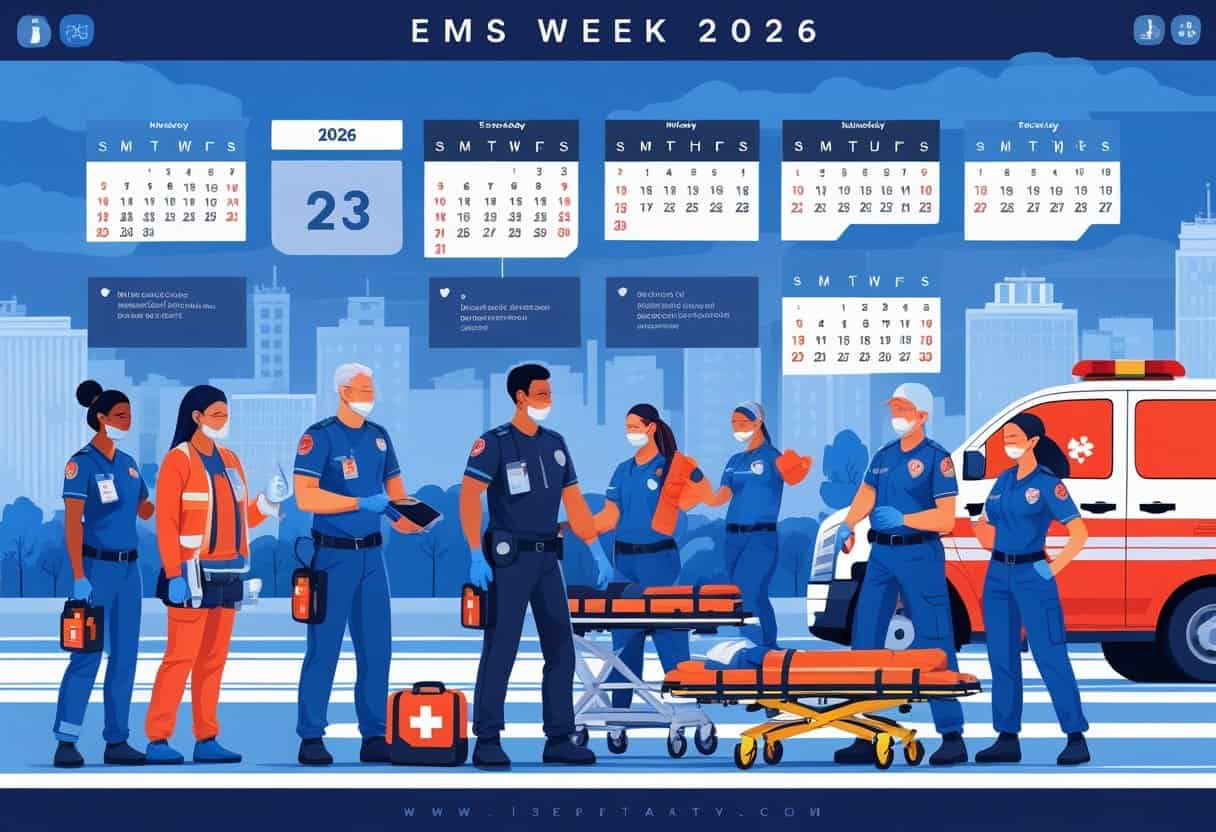
National EMS Week 2026 takes place May 17-23, marking the 52nd anniversary of recognizing emergency medical services professionals across the country. The week features the theme “Improving Outcomes, Together” and serves as a nationwide celebration of EMS workers who provide critical care in communities every day.
Official Dates for EMS Week 2026
EMS Week 2026 runs from May 17-23, falling during the third full week of May as it does each year. This tradition started in 1974 when President Gerald Ford authorized EMS Week™ to celebrate these medical professionals.
The week-long observance happens at the same time across the United States. Communities, hospitals, and fire departments use these seven days to plan special events and recognition activities for their local EMS teams.
Purpose and Significance of EMS Week
National Emergency Medical Services Week brings together communities and medical personnel to honor the dedication of those who provide lifesaving services. You can use this week to show gratitude toward EMTs and paramedics who respond to emergencies 24 hours a day.
The observance also educates the public about what EMS does and why these services matter to communities. EMS Week honors the entire profession and highlights the importance of emergency medical services in protecting public safety and health.
Theme for EMS Week 2026
The 2026 theme “Improving Outcomes, Together” recognizes how EMS professionals bring advanced skills and innovative tools to emergency situations. These advancements include prehospital ultrasound, early stroke recognition, and whole blood transfusion capabilities that make a measurable difference before patients reach hospitals.
The theme extends beyond medical care to emphasize collective responsibility. This includes investing in EMS workers through fair pay, safe staffing levels, mental health resources, and professional growth opportunities. The focus highlights both the clinical improvements in patient care and the need to support the people behind the patch.
Daily Themes and Activities
EMS Week 2026 includes specific theme days that help organize celebrations and training events. Each day focuses on a different aspect of emergency medical services, from professional wellness to community education and workplace safety.
Health, Wellness, and Resilience Day
Sunday kicks off EMS Week with Health, Wellness, and Resilience Day, which promotes the well-being of both EMS professionals and patients. This day recognizes that first responders face unique mental and physical challenges in their work. You can use this day to plan self-care activities for your team or organize wellness workshops.
Consider hosting stress management sessions or fitness activities. Mental health awareness programs work well on this day too. The focus is on building resilience so EMS professionals can better handle the demands of their jobs.
You might also schedule health screenings or nutrition education sessions. These activities remind your team that taking care of themselves helps them provide better patient care. Self-care isn’t selfish in emergency services—it’s necessary for long-term success.
Education Day
Monday is Education Day, which highlights both public education programs and continuing education for EMS professionals. This day gives you a chance to teach your community about injury prevention and emergency preparedness. You can also schedule special training courses for your agency.
Popular community programs include:
- Fall prevention workshops for older adults
- Burn safety demonstrations
- Poisoning prevention education
- Drowning awareness sessions
For your team, consider offering continuing education credits through special courses. Online or in-person training sessions both work well. This day reminds everyone that learning never stops in emergency medical services.
EMS Safety Day
Tuesday focuses on EMS Safety Day, which promotes safety for first responders, patients, and the public. This day encourages you to think about risk prevention rather than just reacting to emergencies. Safety training on this day can cover many important topics.
You might organize programs about proper lifting techniques to prevent injuries. Driving and roadway safety training helps reduce accidents. Vehicle and equipment maintenance checks ensure your tools work when you need them.
Other valuable topics include situational awareness training and violence prevention. Stress reduction techniques fit well on this day too since managing stress improves decision-making in dangerous situations.
Special Recognition and Remembrance Days
Each day during EMS Week focuses on different aspects of emergency medical services, from protecting young patients to honoring those who have died in service. These themed days give communities specific ways to engage with and support their local EMS professionals.
EMS for Children Day
Wednesday of EMS Week celebrates the specialized care that EMS professionals provide to young patients. EMS for children requires unique skills and equipment designed for smaller bodies and different medical needs.
Pediatric emergencies present distinct challenges compared to adult cases. Children respond differently to medications and require appropriately sized equipment. EMS professionals receive special training to handle these situations effectively.
Communities can recognize EMS for Children Day by partnering with local schools to celebrate the work that EMS practitioners provide to young residents. Many agencies host educational events where children can tour ambulances and meet the paramedics and EMTs who serve them. These interactions help reduce fear and anxiety kids might feel during actual emergencies.
Save-A-Life Day
Thursday focuses on teaching the public lifesaving skills through CPR and Stop the Bleed training. These basic techniques can make the difference between life and death when seconds count.
Public CPR programs empower bystanders to take action during cardiac emergencies. Many people survive cardiac arrest because someone nearby knew how to perform chest compressions. Stop the Bleed training teaches simple pressure techniques to control severe bleeding from injuries.
EMS agencies often host free training sessions on Save-A-Life Day. You can learn these skills in just a few hours. Some agencies offer abbreviated demonstrations if you cannot commit to a full course.
EMS Recognition Day
Friday celebrates the daily contributions of paramedics and EMTs who serve their communities. This day honors the hard work and dedication these professionals show throughout the year.
You can show appreciation by writing thank you notes or dropping off food to your local EMS station. Many people think only of fire stations but should also recognize private ambulance services in their area.
Communities sometimes present EMT and Paramedic of the Year Awards to outstanding employees during EMS Recognition Day. Local media often cover these stories to highlight exceptional service. Simple gestures like bringing coffee or snacks mean a lot to crews working long shifts.
EMS Remembrance Day
Saturday honors EMS professionals who have died in the line of duty. This solemn day provides time to reflect on the sacrifices these individuals made while serving others.
The National EMS Memorial Service holds an annual event to memorialize those who died while on duty. Many agencies participate in memorial services or the National EMS Memorial Bike Ride to honor fallen colleagues.
Agencies create lasting tributes in various ways. Some plant memorial gardens that offer quiet spaces for reflection. Others make donations to causes their fallen colleagues cared about. These remembrances keep the memory of dedicated EMS professionals alive in their communities.
How to Celebrate and Participate in EMS Week
EMS Week 2026 runs from May 17-23 and offers many ways to recognize the dedication of EMTs and paramedics. You can celebrate through agency events, community activities, and public awareness campaigns that honor these essential healthcare workers.
Celebrating EMS Professionals and Agencies
You should start by recognizing the individual contributions of your EMS clinicians and practitioners. Consider organizing appreciation events at your station or agency that bring your team together. Simple gestures like providing meals, hosting awards ceremonies, or creating personalized thank-you cards make a real impact.
Many EMS agencies celebrate with creative activities that boost morale. You can arrange:
- Team lunches or catered dinners
- Awards recognizing years of service or outstanding performance
- Uniform or equipment upgrades
- Professional development opportunities
- Mental health wellness sessions
Your celebration should go beyond just food. Focus on meaningful recognition that shows you value your paramedics and EMTs as people, not just workers. Acknowledge the physical and emotional demands they face daily.
Community Involvement Opportunities
You can bring your EMS community together with public events that educate residents about emergency services. Host open houses at your station where families can tour ambulances and meet your crew. These events help people understand what EMTs and paramedics do.
Educational outreach during National EMS Week strengthens community bonds. You might offer:
- Free CPR training sessions
- Blood pressure screenings
- Car seat safety checks
- School visits to teach children about 911
Partner with local businesses to sponsor events or provide donations. Restaurants, shops, and corporations often want to support their local EMS professionals during this week.
Social Media Promotion and Public Awareness
Your online presence amplifies EMS Week celebrations beyond your immediate area. Share photos and stories of your EMS practitioners at work, highlighting their daily contributions. Use the official 2026 theme “Improving Outcomes, Together” in your posts.
Create daily content throughout the week featuring different team members or aspects of emergency medical services. Post about the advanced skills your clinicians use, from prehospital ultrasound to stroke recognition. Tag local media outlets and use relevant hashtags to increase visibility.
Encourage your community to share their own stories about positive experiences with EMS agencies. These personal testimonials help the public understand the critical role paramedics and EMTs play in saving lives every day.
The Role of EMS Professionals in Public Safety
Emergency medical services professionals serve as the critical link between medical emergencies and hospital care. These first responders bring lifesaving skills to patients during their most vulnerable moments, whether in cities, rural areas, or remote locations.
Types of EMS Roles and Specialties
Your local EMS system includes several distinct roles with different levels of training and responsibility. Emergency Medical Technicians (EMTs) provide basic life support, including patient assessment, CPR, oxygen administration, and bleeding control. Paramedics offer advanced care with skills like medication administration, IV therapy, and cardiac monitoring.
Common EMS Positions:
- EMT-Basic: First level of EMS certification
- Advanced EMT: Mid-level provider with additional skills
- Paramedic: Highest level of prehospital care
- Critical Care Paramedic: Specialized transport provider
- Flight Medic: Air ambulance specialist
Some EMS professionals specialize in specific areas like tactical medicine, wilderness response, or community paramedicine. These specialists work alongside emergency physicians and other medical professionals to deliver care in unique settings. Others focus on education, training new providers, or working in dispatch centers to coordinate emergency responses.
Training and Continuing Education
You need extensive training to become an EMS professional. EMT programs typically require 120-150 hours of coursework and clinical experience. Paramedic training demands 1,200-1,800 hours of education, including classroom work, skills labs, and field internships.
Your education doesn’t stop after certification. EMS providers must complete continuing education to maintain their licenses and stay current with medical advances. This ongoing training covers new protocols, equipment, and treatment methods.
State and national organizations set standards for EMS education and certification. You must pass written and practical exams to earn your credentials. Many providers pursue additional certifications in areas like advanced cardiac life support, pediatric emergencies, or trauma care.
Contributions of First Responders
First responders are often the first on the scene during medical emergencies, accidents, and disasters. Your quick assessment and treatment can mean the difference between life and death for patients experiencing cardiac arrest, severe bleeding, or traumatic injuries.
EMS heroes work in challenging conditions, responding to calls at all hours in any weather. They handle not just medical emergencies but also provide emotional support to patients and families during crises. These medical professionals collaborate with firefighters, police officers, and emergency physicians to ensure coordinated care.
The work extends beyond individual patient care. EMS professionals contribute to public health through community education, injury prevention programs, and disaster preparedness planning.
Organizations Behind National EMS Week
Two national organizations work together to lead EMS Week activities each year. ACEP and NAEMT coordinate annual celebrations that help communities recognize the work of emergency medical services professionals across the country.
American College of Emergency Physicians (ACEP)
The American College of Emergency Physicians serves as one of the main presenters of EMS Week. This organization represents emergency physicians who work closely with EMS professionals in hospital settings.
ACEP focuses on advancing emergency care and supporting the physicians who collaborate with paramedics and EMTs. When you see EMS Week events in your community, ACEP helps provide resources and guidance to make these celebrations possible.
The organization works to ensure that emergency medical services get proper recognition for their contributions to public health and safety. ACEP brings the perspective of emergency room doctors who depend on EMS teams to deliver quality pre-hospital care to patients.
National Association of Emergency Medical Technicians (NAEMT)
NAEMT partners with ACEP to present EMS Week and represents the frontline EMS professionals being honored. This organization advocates for EMTs and paramedics nationwide.
NAEMT leads many of the planning efforts for EMS Week activities. You can find educational programs, community events, and recognition ceremonies organized through their work.
The organization develops resources that help local EMS agencies plan their own celebrations. NAEMT promotes public education about EMS and the essential services these professionals provide every day.
Together, these two organizations create a partnership that represents both emergency physicians and EMS professionals. This collaboration ensures EMS Week celebrates everyone involved in emergency medical care.
Resources and Tools for EMS Week 2026
You can access free downloadable materials and planning guides designed specifically for celebrating EMS Week 2026. Official organizations provide logos, social media content, and comprehensive checklists to help you organize events in your community.
Official EMS Week Materials
The National EMS Week website serves as the central hub for all campaign tools and resources. You’ll find downloadable logos, marketing materials, and social media graphics that feature the 2026 theme.
The EMS Week Resource Center offers materials through a multi-platform system. You can access promotional content designed to reach over 850,000 EMS professionals and 21,000 EMS agencies across the United States.
Each resource is free to use for your agency or community. The materials include:
- Digital graphics for social media posts
- Printable posters and flyers
- Official logos for the 51st anniversary
- Templates for community announcements
Event Planning Resources
The National EMS Week planning checklist helps you organize activities around the daily themes. You’ll find guidance for each day from Sunday’s Health, Wellness, and Resilience Day through Saturday’s EMS Remembrance Day.
Organizations can explore over 30 ways to celebrate EMS Week that promote awareness of EMS services. These ideas range from simple recognition activities to larger community events.
You should start planning at least 30 days before May 17, 2026. This timeline allows you to coordinate with local agencies, secure venues, and prepare promotional materials for your community.